 Skip to content


Fast answer: a global shutter exposes and reads the whole sensor at once, while a rolling shutter reads the image line by line. That makes global shutter valuable for fast action, flash sync, LED flicker problems, whip pans, sports, industrial work and video where rolling distortion is unacceptable. It does not automatically make every camera better. It can add cost, tradeoffs and a very specific buyer profile.
The big current example is the Sony Alpha 9 III. Sony describes it as the first full-frame interchangeable-lens mirrorless camera with a global shutter image sensor. That is the camera this article has to center around in 2026, not vague “future cameras are adding global shutter” language. Meanwhile, cameras like the Nikon Z9, Nikon Z8, Nikon Z6 III and Canon EOS R1/R5 Mark II use fast stacked or partially-stacked readout strategies rather than full-frame global shutter.

Sony Alpha 9 III
Global-shutter sports/action specialist
Amazon/MSRP check: about $6,398
Check Current Price
Sony Alpha 1 II
Best no-compromise Sony hybrid
Amazon/MSRP check: about $6,998-$6,999
Check Current Price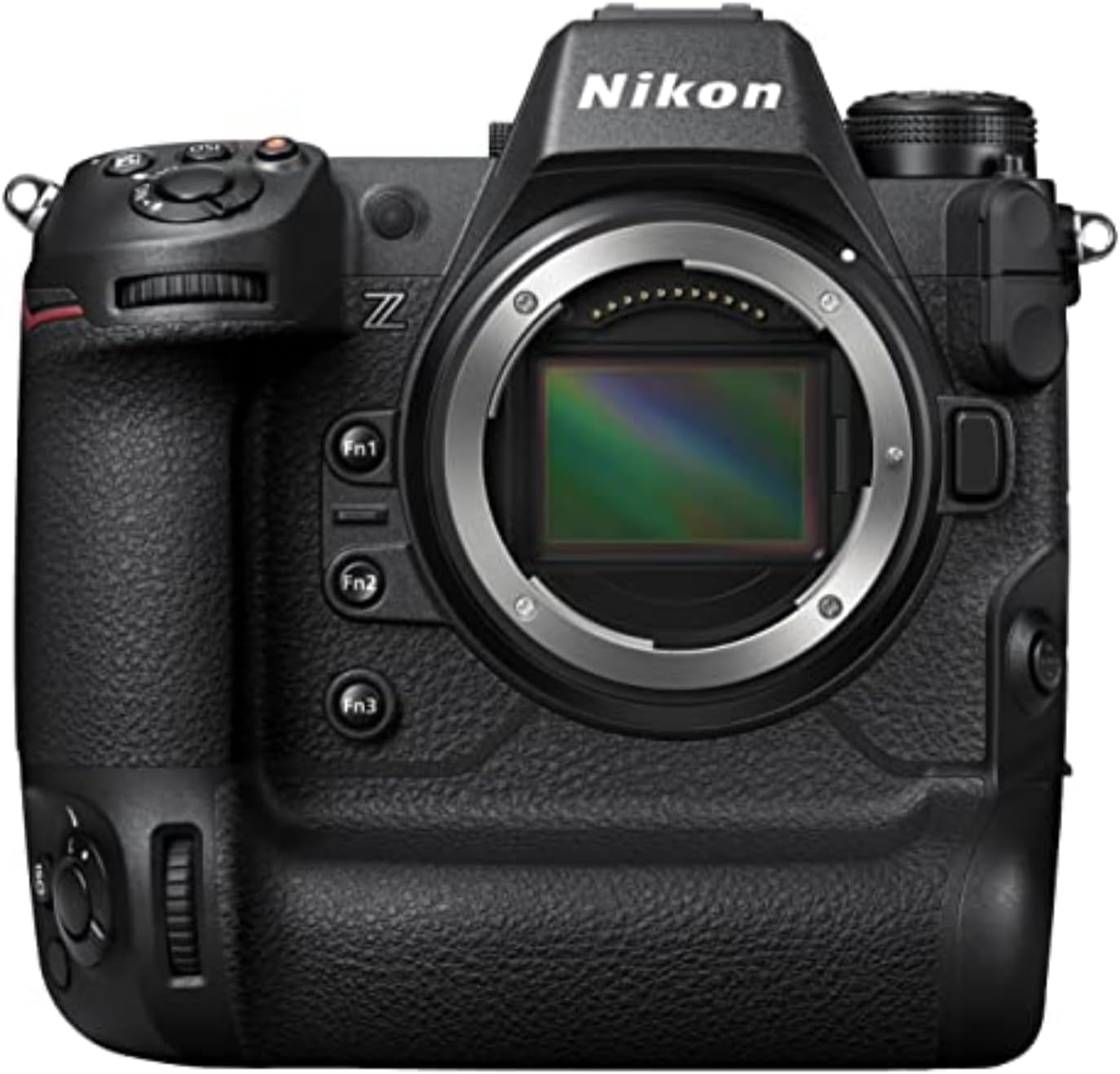


Sony Alpha 7 V
Best practical Sony full-frame hybrid
Amazon/MSRP check: about $2,898-$2,899 body only
Check Current PriceGlobal Shutter vs Rolling Shutter
| Sensor readout | How it works | Best at | Tradeoff |
|---|---|---|---|
| Global shutter | All pixels expose/read simultaneously. | Fast action, flash sync, distortion control, LED/industrial work. | Higher cost and potential image-quality tradeoffs compared with the best rolling/stacked sensors. |
| Rolling shutter | Rows read sequentially from the sensor. | Most stills/video work where readout is fast enough. | Can bend vertical lines, skew fast motion or create flash/LED artifacts. |
| Stacked rolling shutter | A faster rolling sensor with stacked architecture. | High-speed pro bodies with much lower distortion. | Still not the same as true global shutter. |
| Partially-stacked rolling shutter | A middle lane with faster readout than older conventional sensors. | Hybrid cameras balancing cost, speed and image quality. | Not a full global-shutter replacement. |
Which Current Cameras Matter In The Conversation?
| Camera | Readout lane | Why it matters |
|---|---|---|
| Sony Alpha 9 III | Full-frame global shutter | The obvious current example. Great for sports, action, flash sync and distortion-sensitive work. |
| Sony Alpha 1 II | Fast stacked flagship hybrid | High-resolution pro hybrid option, but not global shutter. |
| Nikon Z9 | Stacked electronic-shutter flagship | Nikon proved a no-mechanical-shutter pro body can work when readout is fast enough. |
| Nikon Z8 | Stacked pro hybrid | A smaller pro Nikon body with much of the Z9 logic. |
| Nikon Z6 III | Partially-stacked hybrid | Important because faster readout is moving down-market without becoming global shutter. |
| Canon EOS R1 | Stacked high-speed flagship | Canon says fast sensor readout virtually eliminates rolling-shutter concerns, but it is not marketed as a global-shutter body. |
Why Global Shutter Matters
- No rolling-shutter skew. Straight lines stay straight during fast pans and fast subject movement.
- Flash sync flexibility. The Sony a9 III global-shutter design enables extreme sync behavior that traditional shutters cannot match.
- Action confidence. Sports, wildlife, motorsports and press work benefit when distortion is not quietly warping the frame.
- Video and LED reliability. Fast readout can reduce ugly artifacts around screens, LEDs and rapid motion.
- Industrial/machine vision logic. Global shutter has long mattered where measurement accuracy beats pretty bokeh.
Why Everybody Has Not Switched Yet
Because engineering is rude and refuses to give us every benefit for free. Global shutter can involve cost, sensor complexity, dynamic-range/noise tradeoffs and product-positioning limits. That is why the Sony Alpha 9 III is a specialist, not a $999 beginner camera. For many shooters, a fast stacked rolling-shutter camera is already good enough.
This is where old articles get sloppy. They act like global shutter is an automatic upgrade path for every camera. It is better to say this: global shutter is the best answer to some problems, a very expensive answer to others, and completely unnecessary for many normal creator jobs. If you shoot talking heads, real estate, slow product b-roll or controlled interviews, your money may be better spent on lenses, lights, audio and a camera you can operate confidently.
Who Should Care Most
| Buyer | Care level | Reason |
|---|---|---|
| Sports/action photographers | High | Fast subjects and electronic shutter confidence matter. |
| Flash-heavy event/studio shooters | High | Sync flexibility can be a real workflow advantage. |
| Videographers doing fast motion | Medium to high | Depends on how visible skew, LED artifacts or whip movement are in the work. |
| Real estate/video creators | Low to medium | Useful only if fast movement or lighting artifacts are a problem. Usually not the first budget priority. |
| Beginners | Low | Learn exposure, light, lens choice and editing before paying a global-shutter tax. |
| Industrial/technical imaging | High | Measurement accuracy and motion distortion control can be mission-critical. |
Buying Advice
If global shutter is the reason you are shopping, start with the Sony Alpha 9 III. If you just want a fast pro body, also compare the Sony Alpha 1 II, Nikon Z9, Nikon Z8 and Canon EOS R1 lane. If you are a hybrid creator, the Sony Alpha 7 V or Nikon Z6 III may be a better everyday camera even without global shutter.
The practical question is not “is global shutter better?” The practical question is “what problem am I paying to solve?” If you cannot name the problem, do not buy the technology as a personality upgrade. Cameras are already expensive enough without adding ego accessories.
Related Nitro Guides
- best Sony cameras in 2026 for the broader Alpha/FX lineup.
- best Nikon cameras in 2026 for the Nikon Z lineup and ZR context.
- Canon camera buying guide if you are comparing R1/R5 Mark II style stacked-sensor alternatives.
- Sony E-mount lens guide if lens budget matters more than sensor readout.
FAQ
Is global shutter better than rolling shutter?
It is better for certain problems: fast motion, skew, flash sync and some LED/technical situations. It is not automatically better for every photographer or filmmaker.
Does the Sony a9 III have global shutter?
Yes. Sony describes the Sony Alpha 9 III as using a full-frame global shutter image sensor.
Do Nikon Z9 or Canon EOS R1 have global shutter?
No, they are fast stacked-sensor cameras, not full-frame global-shutter bodies. They can reduce rolling-shutter problems dramatically, but that is not the same sensor readout method.
The Sensor Readout Problem In Plain English
Rolling shutter is not a moral failure. It is a readout method. The camera scans the image from one part of the sensor to another, and if the subject or camera moves fast enough during that scan, the image can bend, wobble or smear in ways that feel wrong. Global shutter avoids that by capturing the whole frame at the same time. That is why the technology gets attention in sports, flash, fast panning, LED-heavy environments and technical imaging.
The catch is that “global shutter” is not a free magic upgrade. Sensor design, dynamic range, noise, cost, speed and product positioning all matter. Sony made the Sony Alpha 9 III a specialist because the feature is valuable to specific buyers. If all you shoot is talking-head content, interviews, slow real estate b-roll or product shots on sticks, global shutter may be the most expensive solution to a problem you barely have.
When Global Shutter Is Actually Worth Paying For
| Use case | Why global shutter helps | How strong the argument is |
|---|---|---|
| Sports photography | Fast subjects and fast pans are less likely to distort. | Very strong if you routinely hit rolling-shutter limits. |
| Flash-heavy work | Extreme flash sync behavior can open creative and practical options. | Strong for photographers who actually use flash this way. |
| Motorsports/fast action video | Straight lines and fast movement stay more natural. | Strong when distortion is visible and unacceptable. |
| LED walls/screens/stage lighting | Can reduce some timing artifacts depending on environment and shutter settings. | Situational but important for event/stage shooters. |
| Industrial/technical imaging | Accurate capture of moving subjects can matter more than aesthetic tradeoffs. | Very strong when measurement or machine vision is involved. |
| Normal creator content | Usually not the first bottleneck. | Weak unless you can name the specific readout problem. |
Stacked Sensors Are Still A Big Deal
A camera does not need global shutter to be fast. Stacked sensors and partially-stacked sensors can dramatically reduce rolling-shutter problems without using global shutter. The Nikon Z9 and Nikon Z8 are strong examples of how fast stacked readout can support electronic-shutter pro work. The Nikon Z6 III and Sony Alpha 7 V show faster readout ideas moving into broader hybrid bodies. That middle lane matters because most buyers need practical speed, not necessarily perfect simultaneous readout.
| Camera lane | Example | Best buyer |
|---|---|---|
| True global shutter | Sony Alpha 9 III | Sports/action/flash specialists who can exploit the readout advantage. |
| Flagship stacked hybrid | Sony Alpha 1 II or Nikon Z9 | Pros who need speed plus broader image-quality/resolution flexibility. |
| Pro stacked hybrid | Nikon Z8 | Hybrid pros who want much of the flagship speed in a smaller body. |
| Partially-stacked hybrid | Nikon Z6 III or Sony Alpha 7 V | Creators who want faster modern readout without jumping to specialist pricing. |
| Standard rolling shutter | Most beginner and midrange cameras | Normal creators where lighting, lens, audio and skill matter more. |
Global Shutter Myths
| Myth | Reality |
|---|---|
| Global shutter means better image quality in every situation. | Not automatically. It solves timing/readout problems; image quality depends on the whole sensor pipeline. |
| Every pro should switch immediately. | No. Many pros are better served by stacked sensors, better lenses, lighting, audio or a different body class. |
| Rolling shutter cameras are obsolete. | No. Many rolling-shutter and stacked cameras are excellent and more practical for most work. |
| Global shutter fixes bad camera movement. | It fixes certain distortions. It does not make a bad pan purposeful. |
| If a camera is expensive, it must have global shutter. | No. The Sony Alpha 1 II, Nikon Z9 and Nikon Z8 are serious cameras without being full-frame global-shutter bodies. |
Buying Decision Tree
- Buy/consider Sony Alpha 9 III first if you shoot fast action, flash-heavy work or distortion-sensitive video and know exactly why global shutter matters.
- Compare Sony Alpha 1 II, Nikon Z9 and Nikon Z8 if you need pro speed but also care about broader flagship image/workflow flexibility.
- Compare Sony Alpha 7 V and Nikon Z6 III if you are a serious hybrid creator and faster modern readout is nice but not the whole reason for the camera.
- Skip the global-shutter premium if your bottlenecks are lighting, audio, editing, composition, lens choice or client workflow. That is most people, said with love.
How To Test Whether You Need It
Before spending global-shutter money, test your actual problem. Shoot fast pans with vertical lines. Shoot the sport or subject you actually cover. Shoot flash if that is the workflow. Shoot under the LED lighting that gives you grief. If the problem is visible, frequent and commercially important, the upgrade may be justified. If you have to create a weird test just to notice it, maybe keep your wallet out of the group chat for now.
Rolling Shutter Symptoms To Look For
| Symptom | What it looks like | Common cause |
|---|---|---|
| Skewed verticals | Poles, buildings or goal posts lean during a pan. | Camera pans faster than the sensor readout can comfortably handle. |
| Jello wobble | The image seems to ripple or wobble during movement. | Vibration, handheld shake, vehicle mounts or fast readout stress. |
| Partial flash banding | Only part of the frame catches the flash. | Flash timing and rolling sensor scan do not line up cleanly. |
| LED banding/flicker | Screens or lights show bands, pulses or odd exposure patterns. | Lighting frequency and shutter/readout timing conflict. |
| Fast object distortion | A bat, club, propeller or fast vehicle looks bent or strange. | The object moves significantly while rows are being read. |
Where Global Shutter Does Not Fix The Real Problem
Global shutter will not fix missed focus, bad exposure, weak lighting, noisy audio, poor composition, bad direction, low-value content or a boring edit. It will not make a cheap lens sharp. It will not make a camera operator suddenly understand blocking. It will not make a service video convert if the offer is vague. This sounds obvious until someone starts shopping for a sensor feature to avoid fixing production fundamentals.
For most Nitro readers, that means global shutter should sit behind basics like lighting, audio, lens choice, camera support, story structure, editing and distribution. If those are handled and readout is still the bottleneck, then yes, the Sony Alpha 9 III conversation becomes much more interesting.
A Practical Upgrade Path
| If you are shooting | Start here | Move up when |
|---|---|---|
| Talking-head and service content | Sony Alpha 7 V or Nikon Z6 III class hybrid bodies are already plenty for many teams. | You can name a real speed/readout problem, not just a spec-sheet itch. |
| Sports/action stills | Sony Alpha 9 III, Sony Alpha 1 II, Nikon Z9 or Nikon Z8 depending system. | Rolling distortion, blackout, AF or burst workflow is costing usable shots. |
| Hybrid creator work | Sony Alpha 7 V, Nikon Z6 III or similar modern hybrid bodies. | Client work requires a specialist body or production workflow. |
| Production video | Sony FX3, Sony FX6 or brand-equivalent cinema lanes. | Rigging, monitoring, ND, audio and reliability matter more than stills features. |
| Flash-heavy/action specialist work | Sony Alpha 9 III is the headline body to inspect. | Flash sync and distortion control are core to the deliverable. |
The Simple Buyer Translation
If you are a normal creator, global shutter is probably not the first upgrade. If you shoot paid sports, fast action, stage work or flash-heavy assignments, it may be a real advantage. If you shoot corporate interviews, service videos, real estate, simple product content or talking-head education, the readout conversation usually sits behind lighting, sound, lens choice and a repeatable production process.
That is why the Sony Alpha 9 III is so interesting but also so easy to misunderstand. It is not a beginner camera that happens to be expensive. It is a specialist camera with a specialist readout advantage. The Sony Alpha 1 II, Nikon Z9 and Nikon Z8 are still more broadly flexible for many pro shooters. The Sony Alpha 7 V and Nikon Z6 III are more sensible for many hybrid creators. Buying the correct lane matters more than buying the loudest feature.
Questions To Ask Before Buying A Global-Shutter Body
- Do I see rolling-shutter distortion in paid work often? If not, the money may be better spent elsewhere.
- Do I use flash in a way that benefits from extreme sync? If yes, global shutter becomes more compelling.
- Are LED/screen artifacts a frequent client problem? Test before buying. Lighting environments vary.
- Will the body fit my lens system? A sensor feature does not matter if the lens ecosystem hurts the job.
- Will clients notice the difference? Technical wins matter most when they protect deliverables or create sellable creative options.
- Am I solving a workflow problem or chasing a spec? Be brutally honest. Cameras are very good at making desire sound like strategy.
Sources Checked For This Refresh
| Source | Why it matters |
|---|---|
| Sony global shutter technology story | Explains rolling vs global shutter and the a9 III engineering context. |
| Sony Alpha 9 III announcement | Official current global-shutter camera source. |
| Canon EOS R1 product page | Canon stacked-sensor high-speed readout context. |
| Canon R1/R5 Mark II announcement | Canon rolling-shutter reduction and stacked-sensor context. |
| Nikon Z9 technology story | Nikon electronic-shutter/no mechanical shutter context. |
| Nikon Z6III official page | Partially-stacked sensor context for mid-range hybrids. |


