 Skip to content
Sports photography is not just fast shutter speed and hope. Yes, speed matters. But the real improvement comes from knowing the sport, pre-focusing your attention before the play happens, using autofocus modes intelligently, positioning yourself where the action is coming toward you, and culling like a person who values sleep. A 30fps burst does not make you a better photographer if every frame is the wrong moment in stunning resolution.
This refresh keeps the useful beginner advice but makes it more practical for 2026 cameras, mirrorless autofocus, high-speed cards, weather prep, sideline workflow, and delivery expectations. Modern cameras are absurdly capable. The problem is that capable cameras also let you generate 4,000 mediocre frames before halftime. The goal is not more images. The goal is more keepers.
Affiliate-wise, sports photography has natural gear opportunities: a real telephoto lens, a monopod, fast cards, and rain protection. I am linking direct Amazon product pages only where a product mention is specific and useful. I am not going to turn a settings tutorial into a shopping mall with a shutter button.
Affiliate disclosure: Some gear links are direct Amazon affiliate links. Nitro Media Group may earn from qualifying purchases. Every Amazon product link in this refresh points to a direct product page with the NMG tag, not a search result or shortened link.
Quick Sports Photography Settings
Start around 1/1000 sec for field sports, use continuous autofocus, pick a focus area that matches the subject, shoot controlled bursts, and raise ISO before accepting motion blur you did not intend. Indoors, you may need wider apertures, higher ISO, and cleaner timing because the light is usually doing its best impression of a school cafeteria.
| Scenario | Starting shutter speed | AF approach | Notes |
|---|---|---|---|
| Outdoor soccer/football/baseball | 1/1000 to 1/2000 sec | Continuous AF with tracking/zone | Use longer lenses and watch plays developing, not just the ball. |
| Indoor basketball/volleyball | 1/800 to 1/1250 sec | Continuous AF, face/eye or zone depending camera | Expect high ISO. Better noise than blurry faces. |
| Motorsports/cycling pan | 1/60 to 1/250 sec for intentional blur | Continuous AF with smooth panning | Practice. This is skill, not a menu setting. |
| Youth sports daylight | 1/1000 sec | Continuous AF with simple subject tracking | Shoot cleaner moments and expressions, not just peak action. |
| Night field sports | 1/800 to 1/1600 if light allows | Continuous AF with bright lens | Under bad lights, timing and exposure discipline matter a lot. |
Tamron’s sports shooting guide uses 1/1000 sec or faster as a practical freeze-action reference, and Sony Alpha Universe emphasizes continuous autofocus for moving subjects. Those are good baselines. They are not commandments. A sliding tackle, a pitcher, a gymnast, and a receiver under stadium lights do not need the same exact settings.

Autofocus: Stop Fighting The Camera
Use continuous autofocus. Canon calls the concept Servo AF, Nikon and Sony often call it AF-C. The naming is less important than the idea: the camera keeps adjusting focus while the subject moves. The trap is using the most magical tracking mode for every situation. Sometimes wide tracking is great. Sometimes it grabs the wrong athlete because the wrong jersey crossed the frame. Sometimes a smaller zone over the action lane is cleaner.
Modern subject detection can help with faces, bodies, helmets, vehicles, birds, and more, depending on the camera. But sports are messy. Players overlap, referees walk into frames with heroic timing, and backgrounds can confuse tracking. If the camera keeps choosing wrong, simplify. Use a zone. Use back-button focus if it helps your timing. Pre-position your focus area where the play is going, not where it was three seconds ago.
| Autofocus mistake | What it looks like | Fix |
|---|---|---|
| Using one-shot/single AF for moving players | Focus locks, athlete moves, image is soft. | Use continuous AF and practice tracking through the play. |
| Letting the camera choose the wrong subject | Sharp referee, soft athlete. A classic tragedy. | Use a smaller zone or manually guide the tracking start point. |
| Only watching the ball | You miss reactions, celebrations, and emotional frames. | Track the play, then look for faces after the moment. |
| Spraying bursts too long | Buffer fills, card slows, edit becomes miserable. | Shoot shorter bursts around the peak moment. |
| Ignoring calibration/firmware/settings | Gear feels inconsistent across games. | Update firmware, test modes, and build a repeatable settings bank. |
Position And Timing Beat Specs
If all your photos are backs, you are standing in the wrong place. The best sports frames usually show the athlete’s face, tension, body shape, ball/puck/equipment context, and a clean enough background that the viewer knows what is happening. That means anticipating where action will come toward you. It also means learning the sport. A good sports photographer reads the game before the camera does.
For youth and local sports, the story is not just the game-winning play. It is concentration, nerves, sidelines, coaches, parents, teammates, celebration, exhaustion, and small details. Those frames sell because they feel human. The big action matters, but the human frame is often what parents and schools remember. If you only shoot the athlete while they are far away chasing the ball, you are leaving half the story on the field.
| Sport type | Good position | Moment to watch |
|---|---|---|
| Soccer | Near attacking thirds, low angle when allowed. | Headers, keeper dives, tackles, celebrations, coaching moments. |
| Basketball | Baseline corners or behind basket when permitted. | Drives, rebounds, defensive pressure, bench reaction, free throws. |
| Football | Downfield angles and sideline movement with safety awareness. | Receiver routes, line impact, quarterback release, celebrations. |
| Baseball/softball | First/third base lines, dugout reaction, outfield if allowed. | Pitcher release, batter contact, slides, defensive plays. |
| Track | Finish line, curve exit, field-event landing zones. | Expressions, stride shape, baton handoffs, peak jumps. |
Build A Shot List That Matches The Client
A school, parent, athlete, booster club, local brand, and newspaper do not all need the same exact coverage. Before the game, decide what success looks like. If the client needs social posts, shoot vertical options and leave room for text. If the client needs a recap gallery, capture action plus reactions, coaches, details, crowd, and atmosphere. If the client needs athlete promos, get hero frames, tight portraits, uniform details, warmups, and emotional moments. If the client is a sponsor, make sure signage and brand context are not an afterthought.
This is where sports photography becomes more than camera settings. The settings help you get sharp files. The shot list helps you get useful files. A perfectly sharp photo of the wrong player, wrong angle, or wrong emotion is still not the answer. Good coverage has variety: wide, tight, action, reaction, detail, celebration, failure, recovery, and context. Sports are stories with scoreboards attached.
| Client need | Must-have frames | Workflow note |
|---|---|---|
| Parent gallery | Faces, effort, clean action, celebrations, sideline personality. | Tag or group by player where practical so the gallery does not become a scavenger hunt. |
| School or team recap | Hero action, crowd, coach moments, bench energy, scoreboard/context. | Deliver fast selects that work for web, email, and social. |
| Athlete promo | Dramatic low angles, tight portraits, uniform details, peak action, confidence. | Plan some controlled frames before or after the game if access allows. |
| Sponsor or brand | Action plus signage/context without making it look like a billboard accident. | Ask what logos, products, or activations matter before the game starts. |
| Editorial/news | Clear storytelling, key players, decisive moments, captions, fast delivery. | Names, teams, date, event, and context matter as much as image polish. |
Also, do not ignore safety. Sidelines are working areas. Keep your head up, stay out of play, respect officials, and do not plant gear where athletes can crash into it. A great photo is not worth becoming part of the tackle.
Cull Like A Professional, Not A Data Hoarder
The hidden skill in sports photography is editing down. A game can produce thousands of frames, and most clients do not want a giant gallery of almost-the-same burst. They want the best moments, clean focus, good expressions, readable action, and enough variety to tell the event story. Cull once for technical misses, again for duplicate moments, and a third time for emotional value. If five frames show the same catch, pick the one with the best face, ball position, body shape, and background. The rest are just hard-drive confetti.
Color consistency matters too. Indoor gyms and night fields can be ugly. Get skin tones believable, keep uniforms consistent, and do not over-sharpen noise into crunchy sadness. If you are delivering for social, export some vertical crops intentionally instead of letting a platform crop off the athlete’s head. If you are delivering for parents, give them enough resolution to print. If you are delivering for a school or team, provide web-ready files with sensible filenames and folders. The camera gets the frame. The delivery gets you hired again.
One more practical note: protect your best frames early. Import to a main drive, back up to a second drive, and do not wipe cards until the job is delivered or safely duplicated. Sports jobs move fast, and the memory-card chaos can get real if you are shooting multiple games in one day. A simple folder structure by date, team, and event will save you from future-you trying to decode a pile of files named like a printer password.
Gear That Actually Helps Sports Photography
You can shoot sports with modest gear if you understand the sport and get close enough. But some purchases do make a real difference. A 70-200mm f/2.8 is still the classic indoor/event/sideline workhorse. Fast memory cards matter because burst speed and buffer clearing are not marketing trivia when the play keeps going. A monopod matters because your arms are not suspension bridges. Rain protection matters because games do not reschedule themselves around your camera bag’s feelings.

Sony FE 70-200mm F2.8 GM OSS II
Pro Sony sports telephoto
Amazon benchmark: about $2,898
Check Current Amazon Price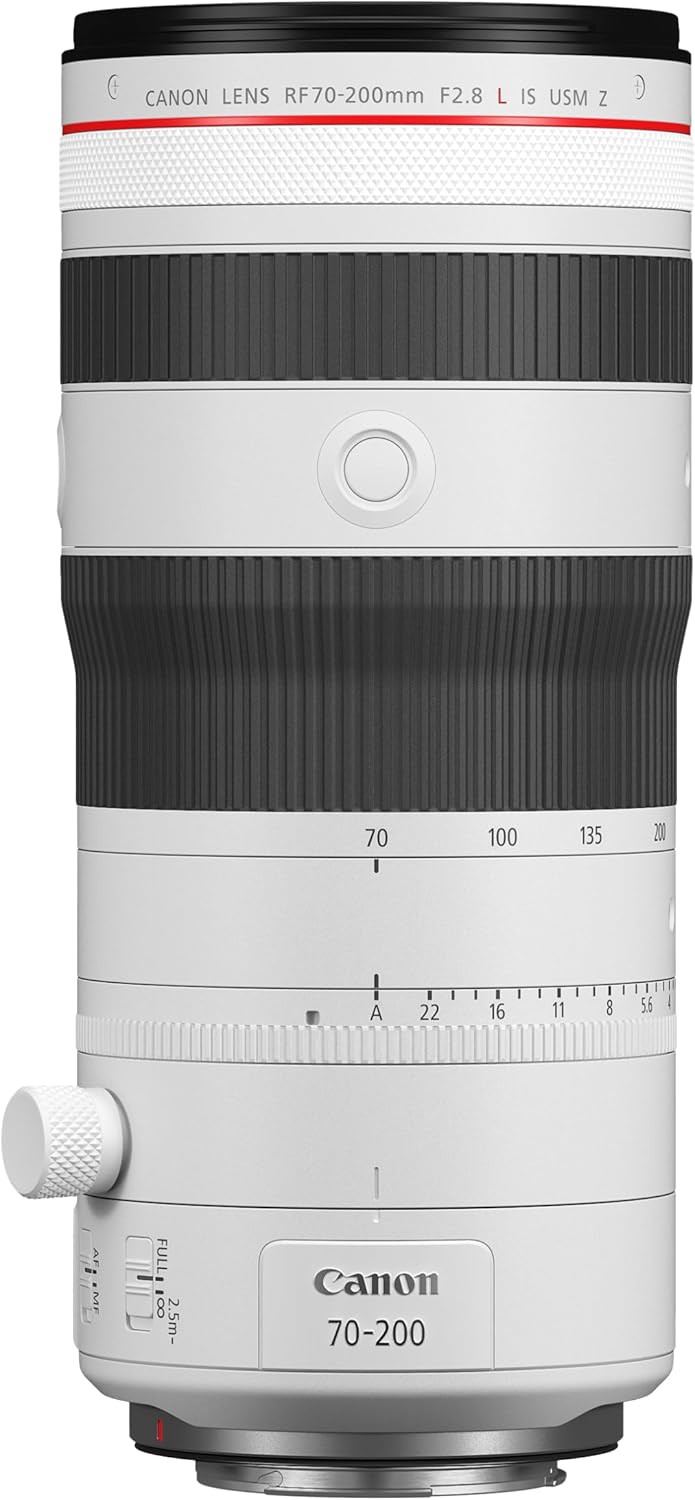
Canon RF 70-200mm F2.8 L IS USM Z
Pro Canon hybrid telephoto
Amazon benchmark: about $3,098
Check Current Amazon Price
Nikon NIKKOR Z 70-200mm F2.8 VR S II
Pro Nikon sports telephoto
Amazon benchmark: about $3,196.95
Check Current Amazon Price
SanDisk Extreme PRO SD UHS-II V90 128GB
Fast SD card for burst and video work
Amazon price seen: $199.99
Check Current Amazon Price
ProGrade Digital CFexpress 4.0 Type B 512GB
Fast CFexpress card for pro bodies
Amazon price seen: $499.99
Check Current Amazon Price
Manfrotto XPRO+ Video Monopod
Field support for sidelines and long lenses
Retail watch: $249.88-$384.95
Check Current Amazon Price| Gear | Why it helps | Buying note |
|---|---|---|
| Sony FE 70-200mm F2.8 GM OSS II | Fast Sony telephoto for sidelines, indoor sports, portraits, and event coverage. | Check if your Sony body needs SD, CFexpress Type A, or both before buying cards. |
| Canon RF 70-200mm F2.8 L IS USM Z | Modern RF hybrid telephoto with a pro sports/event role. | Great lens, but do not spend this before you know the Canon body path. |
| Nikon NIKKOR Z 70-200mm F2.8 VR S II | Nikon Z telephoto lane for high-end sports and event coverage. | Pair with cards that match your Nikon body’s real burst/video requirements. |
| SanDisk Extreme PRO SD UHS-II V90 128GB | Fast SD card for cameras that benefit from UHS-II/V90 performance. | Overkill for some bodies, essential for others. Check your camera manual. |
| ProGrade Digital CFexpress 4.0 Type B 512GB | CFexpress Type B card option for pro bodies and high-speed workflows. | Capacity and sustained write speed matter more than the biggest headline number. |
| Manfrotto XPRO+ Video Monopod | Takes weight off long lens work and helps video/photo stability from the sideline. | A monopod will not fix bad timing, but your shoulder may send a thank-you note. |
For rain, I would rather link a sizing/source reference than pretend one cover fits every camera. Think Tank’s current rain cover sizing guidance is useful because lens length and body setup decide the cover. If you name a specific rain cover in the article, link the exact product; if you are still choosing size, use the sizing source first.

Game-Day Workflow
Sports photography falls apart when the workflow is an afterthought. Charge batteries the night before. Format cards only after backups are verified. Sync camera time if multiple bodies are involved. Build a shot list by sport. Know whether the client needs hero selects during the game, same-night delivery, social crops, or a full gallery later. Shooting is only the visible part. Delivery is where people decide whether you are worth hiring again.
- Before the game: check schedule, access, lens choice, weather, light, roster, client expectations, and file-delivery deadline.
- During warmups: test exposure, white balance, AF mode, burst depth, and background angles.
- During play: shoot short bursts, protect cards, tag strong frames if your camera supports it, and vary action/reaction/detail.
- Halftime or breaks: back up critical cards if possible, send quick selects if the client needs social proof.
- After the game: ingest immediately, cull hard, deliver hero selects first, then full gallery with consistent color and captions where useful.
| Delivery type | Best use | Workflow move |
|---|---|---|
| 10-20 hero selects | Social, school, team, sponsor, or press recap. | Cull fast, prioritize faces and peak moments, export web-ready crops. |
| Full gallery | Parents, athlete packages, yearbooks, team archives. | Cull duplicates aggressively and organize by event/team/player where possible. |
| Commercial/editorial package | Brand, sponsor, campaign, media outlet. | Deliver selects with licensing clarity, caption notes, and usage terms. |
| Video/social clips | Hybrid creator coverage. | Plan orientation, frame rates, and audio before the game starts. |
Related Nitro Guides
- Sony lens buying guide for sports lens paths.
- Canon RF lens guide for Canon telephoto decisions.
- Nikon Z lens guide for Nikon sports/event glass.
- Best video production in San Antonio for sports/video vendor context.
- Prime Day creator gear watchlist if you are deal-checking cards, tripods, power, and field gear.
FAQ
What shutter speed is best for sports photography?
Start around 1/1000 sec for many outdoor sports, then adjust by sport, light, focal length, and whether you want to freeze or blur motion intentionally.
Do I need a 70-200mm f/2.8 lens?
Not always, but it is a classic sports and event lens for a reason. If you shoot indoor sports, sidelines, portraits, or evening events often, a pro 70-200mm can make a real difference.
Should I use burst mode?
Yes, but use controlled bursts. Holding the shutter forever creates edit pain and can fill buffers exactly when the best play happens.
What is the best autofocus mode for sports?
Use continuous autofocus, then choose subject tracking, zone, or smaller focus areas based on your camera and sport. If tracking grabs the wrong player, simplify.
How do I make sports photos sharper?
Use a fast enough shutter, good technique, continuous AF, correct focus area, stable support when needed, and better positioning. Also cull honestly. Some frames are not soft; they are just not good.
Sources Checked For This Refresh
| Source | Why it matters |
|---|---|
| Sony Alpha Universe sports tips | Current sports autofocus and technique reference. |
| Tamron sports shooting guide | Practical shutter-speed and sports shooting reference. |
| Think Tank rain cover sizing | Current rain-cover selection guidance. |


