 Skip to content
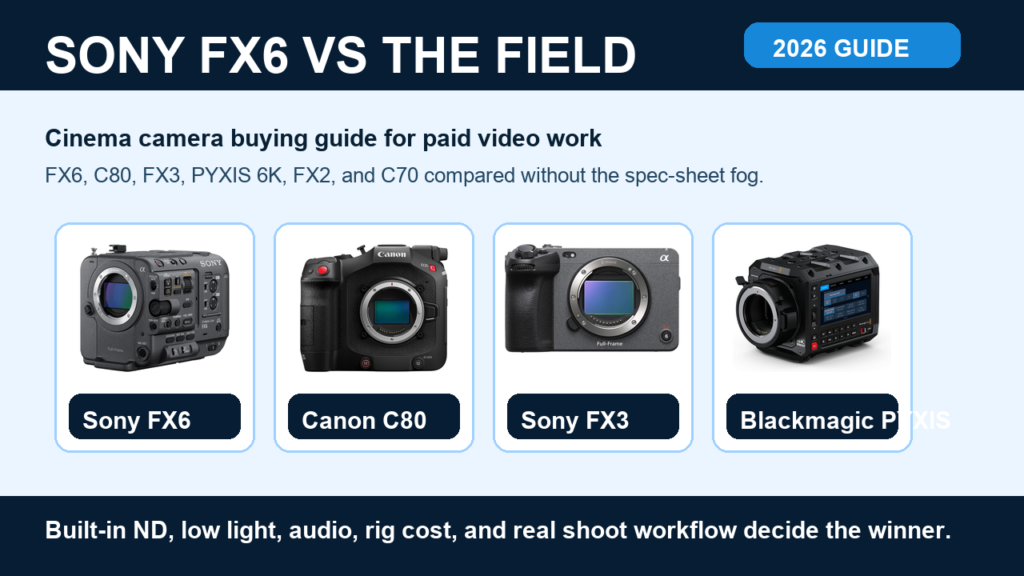
The Sony FX6 is still one of the easiest cinema cameras to understand in 2026: it is expensive, it is not flashy in the social-media-hype way, and it keeps solving real production problems. Built-in variable ND, strong low-light performance, good autofocus, pro audio, timecode-friendly workflows, and a body that can be built fast are the whole point. It is not here to win a spec-sheet argument in a comment section. It is here to get paid work done without making your day weird.
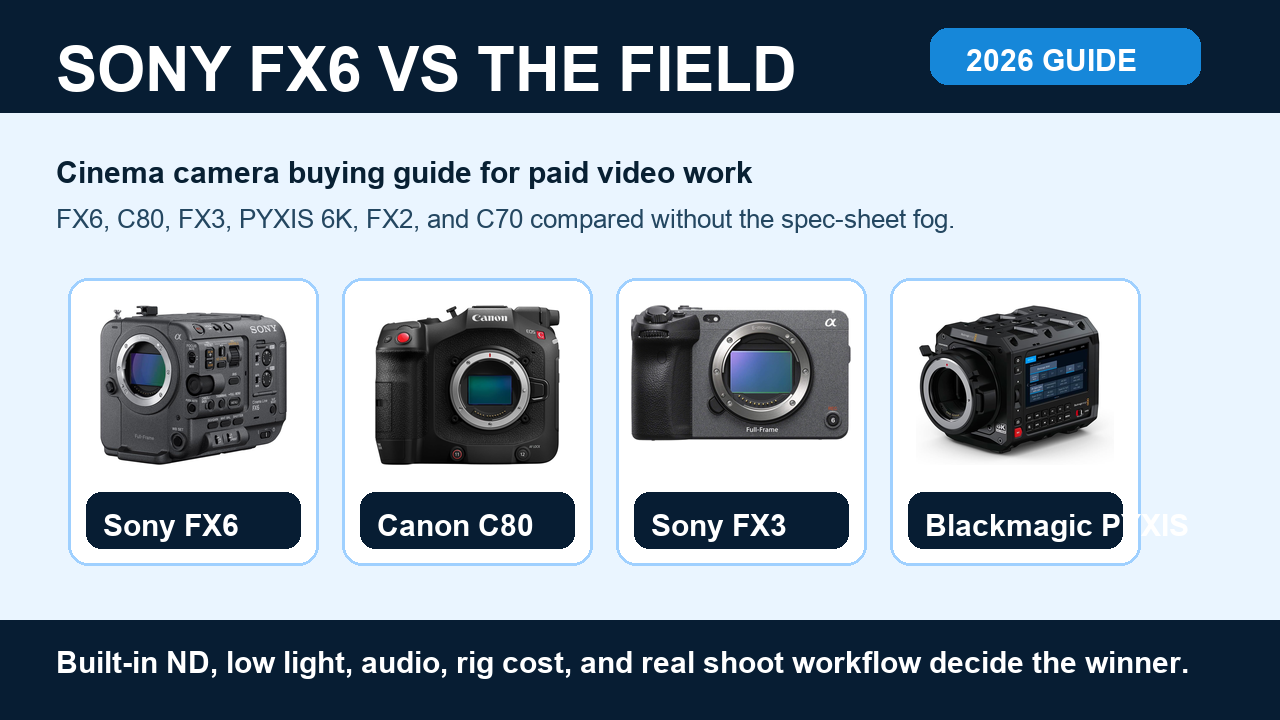
This refresh compares the Sony FX6 against the Canon C80, Sony FX3, Blackmagic PYXIS 6K, Sony FX2, and Canon C70. I pulled current Amazon product pages before publishing so the camera mentions below use direct tagged product links, not search links or random bundle paths. Prices move, sellers change, and cinema-camera stock can get strange, so use the buttons to verify live price, seller, warranty, return window, and bundle contents before buying.
- Quick answer
- Current Amazon price check
- FX6 comparison table
- Where the FX6 still wins
- Product-by-product notes
- What I would buy by use case
- FAQ
Quick Answer: Is The Sony FX6 Still Worth It In 2026?
Yes, the Sony FX6 is still worth it if your work is paid video production, events, documentary, corporate, interviews, live-action branded content, or run-and-gun work where speed matters. The reason is not that the FX6 has the biggest number in every column. It does not. The reason is that the camera gives you the boring professional stuff that saves shoots: internal variable ND, full-frame low-light confidence, solid autofocus, proper audio handling, good ergonomics, and a build that can move fast.
If you mostly shoot controlled narrative work and you want maximum image-per-dollar, the Blackmagic PYXIS 6K deserves a hard look. If you want Canon color, 6K, RAW options, SDI, and newer Canon autofocus in a compact full-frame cinema body, the Canon C80 is the more direct current rival. If you want a smaller Sony for gimbals, travel, YouTube, or solo creator work, the Sony FX3 is still the simpler answer. If budget is the problem, the Sony FX2 and discounted Canon C70 are the value checks.
| Camera | Best for | Current Amazon price checked | Straight answer |
|---|---|---|---|
| Sony FX6 | Paid run-and-gun, event, doc, corporate, interview, small crew production | $6,998.00 | Best all-around professional handling pick here. |
| Canon C80 | Canon shooters wanting full-frame cinema, 6K, RAW options, SDI | $5,499.00 | The strongest Canon full-frame rival to the FX6. |
| Sony FX3 | Solo creators, travel, gimbal, compact Sony video rigs | $4,198.00 | Smaller, cheaper, but no built-in ND and less pro-body convenience. |
| Blackmagic PYXIS 6K | Rigged narrative, commercial, controlled shoots, Blackmagic RAW workflows | $3,057.28 | Best image-value lane if you accept the rig-first workflow. |
| Sony FX2 | Budget-conscious Sony Cinema Line buyers | $2,698.00 | Interesting cheaper Sony lane, but not an FX6 replacement. |
| Canon C70 | Discounted Canon Super 35 cinema work | $3,499.00 | Still useful at a strong price, especially for Canon shooters. |

Sony ILME-FX6 Cinema Line Full-Frame Camera
Amazon price checked: $6,998.00Best run-and-gun pro video body. Built-in variable ND, full-frame low-light strength, pro audio/IO, and a body that makes sense for documentary, event, corporate, and small-crew production.
Check current price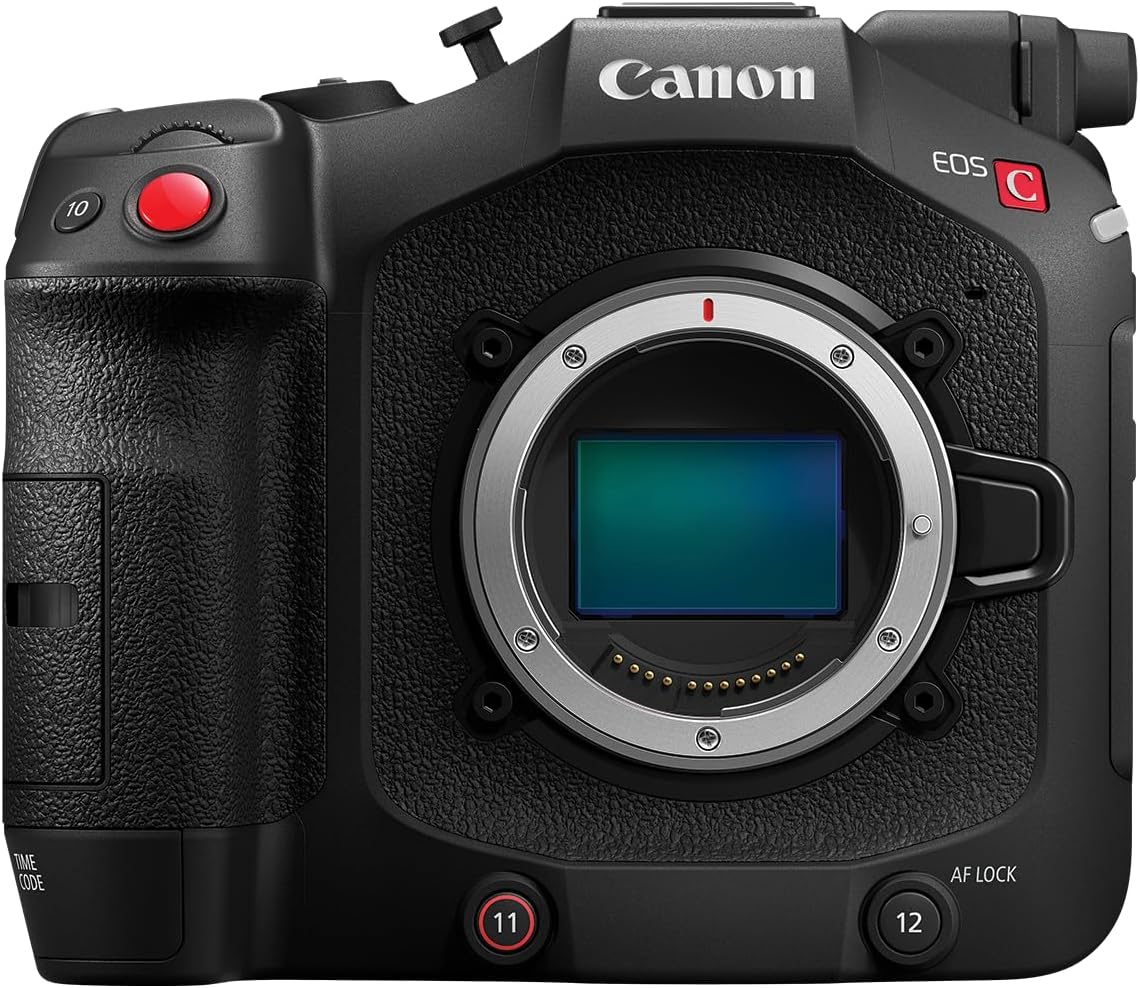
Canon EOS C80 6K Full-Frame Cinema Camera
Amazon price checked: $5,499.00Best Canon full-frame cinema rival. A newer full-frame Canon cinema body with 6K, internal RAW options, strong autofocus, SDI, and Canon color in a smaller package.
Check current price
Sony Alpha FX3 Full-Frame Cinema Line Camera
Amazon price checked: $4,198.00Best compact Sony alternative. A smaller Cinema Line body for gimbals, travel, solo creators, and hybrid-style video work where built-in ND is less critical.
Check current price
Blackmagic Design PYXIS 6K EF Full-Frame Digital Film Camera
Amazon price checked: $3,057.28Best rig-first image-value pick. A strong image-first box camera lane for people who want Blackmagic RAW and are willing to build the rig around it.
Check current price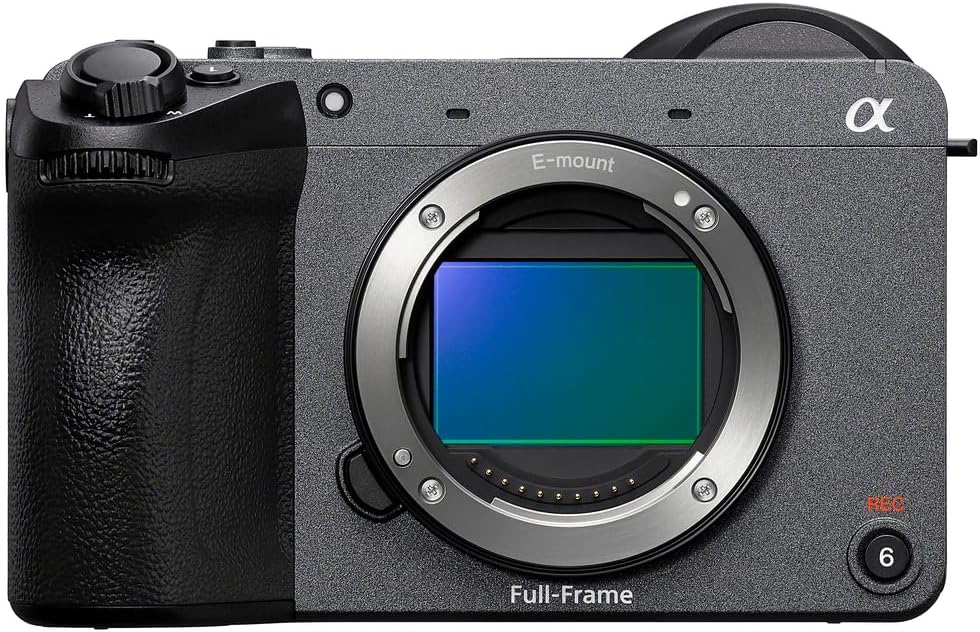
Sony FX2 Full-Frame Cinema Camera Body Only
Amazon price checked: $2,698.00Best cheaper Sony Cinema Line watch. A lower-cost Sony Cinema Line option for creators who want full-frame Sony video tools without jumping straight to the FX3 or FX6.
Check current price
Canon EOS C70 Cinema Camera
Amazon price checked: $3,499.00Best discounted Canon Super 35 workhorse. Still useful when the discount is strong, especially for Canon shooters who want internal ND, Canon color, and a compact cinema body.
Check current priceSony FX6 Vs The Field: The Real Comparison
A camera comparison should not be a spreadsheet with feelings. The better question is what kind of shoot you are trying to survive. A camera can have gorgeous footage and still be annoying on a paid job if you need external ND, extra rigging, fragile power, awkward monitoring, or a setup that takes too long while the client is already asking if you are ready.
| Camera | FX6 advantage | Rival advantage | Who should pick the rival |
|---|---|---|---|
| Canon C80 | Sony ecosystem, variable ND, proven FX workflow, low-light familiarity | 6K full-frame Canon cinema body, RAW options, Canon color, SDI | Canon shooters or teams who want the newer Canon full-frame cinema lane. |
| Sony FX3 | Built-in ND, better pro video body shape, SDI/timecode-friendly production feel | Smaller, cheaper, easier on gimbals and travel rigs | Solo creators who want compact Sony full-frame video more than a pro cinema body. |
| Blackmagic PYXIS 6K | Speed, autofocus, ND, event/doc practicality | Blackmagic RAW, rigged cinema image value, lower entry price | Controlled-shoot crews that build rigs and live in DaVinci Resolve. |
| Sony FX2 | Pro handling, ND, better production body, stronger paid-work confidence | Lower price, newer lower-cost Sony option | Creators who want Sony Cinema Line flavor without FX6 money. |
| Canon C70 | Full-frame look, Sony AF/low-light, established FX production workflow | Discounted Canon Super 35 cinema body with internal ND | Canon shooters who find a strong deal and do not need full-frame. |
Where The Sony FX6 Still Wins
1. Built-in variable ND saves real production time
This is the feature that makes the Sony FX6 feel like a grown-up production tool. Built-in variable ND sounds boring until you are outside, light is changing, the client is waiting, and you are trying to keep your shutter and aperture where you want them. External ND works. Matte boxes work. Screw-on filters work. But built-in variable ND is faster and cleaner when the day is moving.
That is why the FX6 keeps making sense for event video, documentary, corporate work, weddings, interviews, real estate video, sports-adjacent content, and small crews. It removes one more thing that can slow you down. Production is usually won by the boring advantages. Sexy spec sheets are fun. Not missing the shot is better.
2. Low-light performance is still a real reason to buy it
The Sony FX6 is strong in low light, and that matters for real jobs. Event venues, churches, conference rooms, restaurants, gyms, behind-the-scenes locations, and corporate spaces are not built for your camera. They are built for people who think recessed ceiling lights are a cinematography plan. The FX6 gives you more room before the image starts falling apart.
That does not mean you should stop lighting scenes. Please do not turn low-light performance into an excuse to make everything look like security footage with ambition. But it does mean the FX6 gives you margin when the room, schedule, or client does not cooperate. Pair it with smarter lighting from the three-point lighting guide and it gets even better.
3. It is a better paid-work body than the specs suggest
The FX6 is not the most exciting camera if you only compare resolution and codec tables. That is where people get lost. On a paid shoot, the body shape, audio, ND, monitoring, battery strategy, autofocus, menus, reliability, and speed matter a lot. The FX6 is good because it feels designed around the day, not just the brochure.
Product-By-Product Buying Notes
Sony FX6: buy it when the job needs speed and confidence
The Sony FX6 is the camera I would choose for small-crew professional video when the day has to move. Corporate interviews, event coverage, documentary, commercial b-roll, sports features, nonprofit pieces, and branded content all fit the FX6 personality. It gives you a lot of the professional video conveniences without becoming a huge shoulder camera that needs its own zip code.
- Buy if: you need a professional workhorse for paid video and you value built-in ND, low-light, audio, and speed.
- Skip if: you mostly shoot controlled narrative work where a rigged image-first camera gives more value.
- Nitro take: the FX6 is not cheap, but it is one of the least annoying ways to shoot serious work fast. That counts.
Canon C80: the strongest current Canon rival
The Canon C80 is the camera in this group that most directly challenges the FX6 for current full-frame cinema-camera buyers. It brings Canon color, a compact body, 6K capture, internal RAW options, strong autofocus, and professional connections. If your team is already on Canon RF lenses or loves the Canon image pipeline, the C80 is not a side note. It is a real option.
- Buy if: you are in Canon, want full-frame cinema, and need a newer production body with SDI and RAW options.
- Skip if: Sony glass, Sony autofocus behavior, or FX workflow already owns your kit.
- Nitro take: this is the FX6 rival I would take most seriously for Canon-first teams.
Sony FX3: smaller, cheaper, and still very useful
The Sony FX3 is not a baby FX6 in every way, and that is fine. It is a compact Cinema Line body that makes more sense for solo creators, gimbals, travel, compact rigs, and hybrid production days where you do not need a full cinema body. It gives you strong Sony full-frame video in a much smaller package.
Where it loses is production convenience. No built-in ND is the obvious one. The body is smaller, which is great until you start bolting everything onto it. If you are mostly building it into a cinema rig, ask whether you are saving money or just moving the cost into accessories.
Blackmagic PYXIS 6K: image value, but build the rig
The Blackmagic PYXIS 6K is the image-value argument. If you like Blackmagic RAW, controlled production, DaVinci Resolve workflows, and a box-camera build, it is compelling. The price is also hard to ignore compared with the FX6. But the workflow is different. You are building a rig, thinking through power, monitoring, audio, ND, and media in a way that is less plug-and-go than the FX6.
That is not bad. It is just a different job. For narrative, commercial, studio, and controlled shoots, the PYXIS can be the smarter spend. For event/doc/corporate work where speed and ND matter, the FX6 still feels safer.
Sony FX2: lower-cost Sony Cinema Line, not an FX6 replacement
The Sony FX2 is interesting because it brings Sony Cinema Line language into a lower price range. For creators, small teams, and buyers trying not to spend FX6 money, it deserves a look. But it is not magically an FX6 replacement. You are paying less because the workflow, body, and production features are different.
Canon C70: still useful when discounted hard
The Canon C70 is still worth mentioning because discounts can change the math. It is Super 35 rather than full-frame, and the C80 is the more current Canon full-frame rival. But if the Canon C70 price is aggressive and you want internal ND, Canon color, compact cinema handling, and an RF-mount production body, it can still make sense.
What I Would Buy By Use Case
| Use case | Best pick | Why |
|---|---|---|
| Corporate interviews and small crew client work | Sony FX6 | Fast setup, ND, audio, autofocus, low-light, and professional handling. |
| Canon-first production team | Canon C80 | Full-frame Canon cinema body with modern Canon features and pro connections. |
| Solo creator, travel, gimbal-heavy work | Sony FX3 | Smaller and easier to carry while keeping strong Sony video quality. |
| Rigged narrative or controlled commercial shoots | Blackmagic PYXIS 6K | Great image-value lane if you are already building a camera rig. |
| Budget Sony cinema-line entry | Sony FX2 | Lower-cost Sony option for creators who do not need the FX6 body. |
| Discounted Canon Super 35 cinema buy | Canon C70 | Strong if the price is right and full-frame is not required. |
Where To Spend Before A New Camera
Before buying any of these bodies, audit your kit honestly. If your audio is weak, read the wireless microphone guide. If your interview lighting is flat, fix that before buying another sensor. If you shoot real estate, check the real estate videography gear guide so the camera body fits the actual property workflow. If you are building around seasonal deals, keep the Prime Day 2026 Creator Gear Playbook open too.
The painful truth is that many shooters do not need a better camera first. They need better audio, better lighting, cleaner power, faster media, smarter lenses, and a less chaotic workflow. A better camera makes good work look better. It does not automatically make messy work professional. Cameras are tools, not absolution.
FAQ
Is the Sony FX6 still worth buying in 2026?
Yes, if you shoot paid video work where built-in ND, low-light performance, autofocus, pro audio, and fast handling matter. It is still one of the most practical full-frame cinema cameras for small crews and solo operators.
Is the Canon C80 better than the Sony FX6?
It depends on the system and the job. The Canon C80 is very compelling for Canon shooters who want a newer full-frame cinema body with 6K and RAW options. The Sony FX6 still wins for teams already invested in Sony and for shooters who prize the FX workflow and variable ND.
Should I buy the Sony FX3 instead of the FX6?
Buy the Sony FX3 if you need a smaller, cheaper, gimbal-friendly Sony body and can live without built-in ND. Buy the Sony FX6 if paid production speed, audio, ND, and pro handling matter more than size.
Is the Blackmagic PYXIS 6K a better value than the FX6?
For controlled, rigged, image-first work, yes, it can be a better value. For event, documentary, corporate, and fast-moving production, the FX6 is usually easier to trust because it is more self-contained and practical.
What is the best budget alternative to the Sony FX6?
The Sony FX3, Sony FX2, Blackmagic PYXIS 6K, and Canon C70 can all be budget alternatives depending on the job. The right answer depends on whether you need compact size, Sony workflow, Blackmagic RAW, Canon color, internal ND, or the lowest total rig cost.
Should I buy a cinema camera from Amazon?
You can, but verify the seller, condition, warranty language, return window, and exact bundle before buying. For expensive bodies, avoid vague third-party bundles unless the seller and contents are extremely clear.
Bottom Line
The Sony FX6 remains the safest professional all-around pick in this comparison when the work is fast, paid, and practical. The Canon C80 is the strongest full-frame Canon rival. The Sony FX3 is the compact Sony choice. The Blackmagic PYXIS 6K is the image-value rig camera. The Sony FX2 is the cheaper Sony Cinema Line watch. The Canon C70 is still viable when the discount is strong.
My honest recommendation: buy the FX6 if you need the FX6 workflow, not because you want to own the camera that sounds most professional. If the job does not need built-in ND, pro audio handling, and fast production ergonomics, one of the cheaper bodies may be the smarter move. If it does need those things, the FX6 keeps earning its annoying price tag.


